When evaluating removable blanket insulation, most people focus on insulation thickness, temperature ratings, or fabric quality. However, one critical factor is often overlooked: fit.
At first glance, an oversized, box-type insulation cover with large air gaps may seem harmless. In fact, some may even assume that additional air space improves insulation performance. While air can be an excellent insulator when trapped in small pockets, large cavities inside a blanket insulation system can have the opposite effect.
Poor fit leads to air circulation, localized overheating, premature degradation, and increased energy losses. Understanding why requires a closer look at how heat actually moves.
Still air has a remarkably low thermal conductivity—approximately 0.026 W/m·K at room temperature. For context, this is incredibly close to the thermal conductivity of the high-grade fiberglass or needle mat insulation material itself, which typically ranges from 0.035 W/m·K to 0.045 W/m·K.
This similarity is no coincidence; traditional insulation materials work primarily by trapping thousands of tiny, stagnant air pockets within their fibers to stall heat transfer. However, this exceptional insulating benefit only exists when the air remains completely stagnant.
When large cavities or gaps wider than 6 mm to 13 mm (1/4" to 1/2") form inside loose-fitting or oversized blanket insulation, the physics completely change. The significant temperature difference between the hot equipment surface and the cooler outer jacket causes the air density to shift:
This motion triggers natural convection currents inside the insulation system. Instead of acting as a barrier, the moving air becomes a highly efficient vehicle, actively transporting heat away from the equipment and dumping it directly into the seams, closures, and outer fabric jacket.
Key Takeaway: While still air is an excellent technical insulator, moving air becomes an active mechanism for energy loss.
In vertical applications, this phenomenon becomes even more pronounced. As the process equipment heats the
air inside a loose blanket, the warmer air naturally rises. Cooler air from the surrounding environment is then drawn inward through unsealed gaps to replace it, creating a continuous circulation loop. This movement acts much like a miniature chimney inside the insulation cover.
Known as the chimney effect, this internal air circulation transports heat upward and concentrates it around overlaps, seams, and closures. Over time, localized hot spots develop, resulting in:
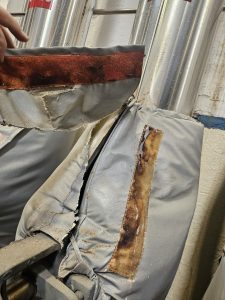
Large air voids are commonly found in oversized box-type or generic single-piece designs where the blanket does not closely follow the geometry of the equipment.
In these cases, heat is no longer forced to travel primarily through the insulation material. Instead, moving air inside the cavity becomes an additional heat transfer mechanism. The problem is particularly noticeable on complex components with irregular shapes.
The larger the internal cavity, the greater the potential for convective heat transfer, accelerated fabric wear, and unmitigated energy loss.
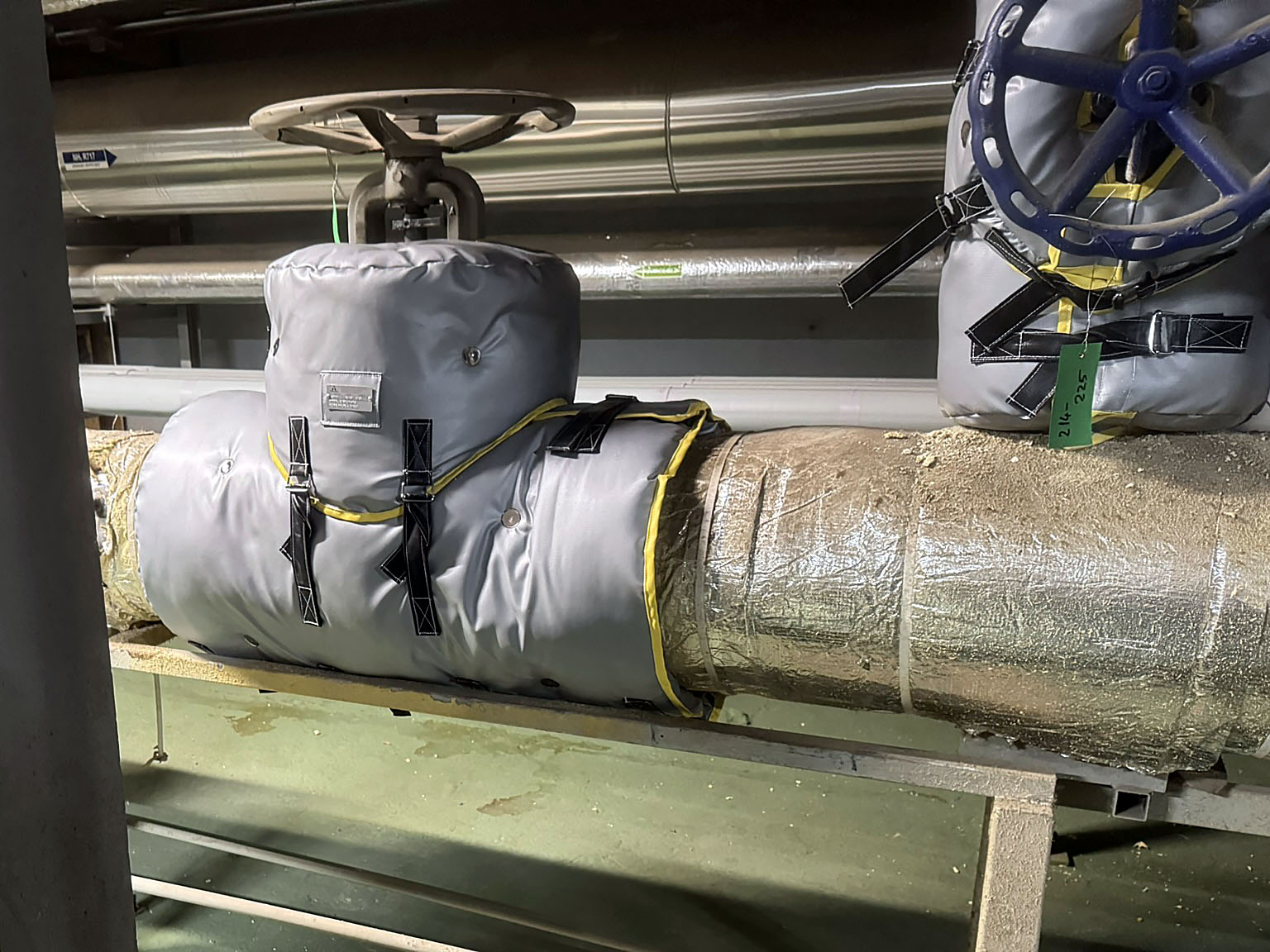
A properly engineered blanket insulation system minimizes unnecessary air space while maintaining enough flexibility for easy installation and removal. By closely following the contours of the equipment, a tight-fitting design:
The effectiveness of blanket insulation depends not only on the insulation material itself, but also on how efficiently that material is utilized through engineered geometry.
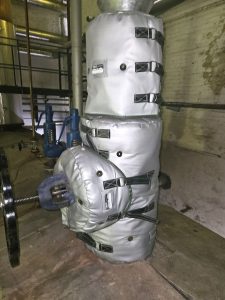
Another common weakness of simple or oversized insulation designs is leaving the ends open or closing them with simple fabric flaps and loose draw cords. Although this approach reduces manufacturing costs, it creates large, unsealed openings where hot air can enter and escape.
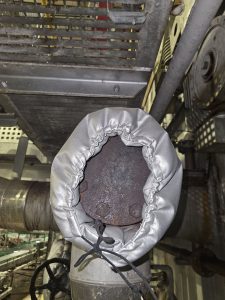
These unsealed openings act as the intake and exhaust vents for the chimney effect. They allow heated air to rapidly rise through the cavity, letting heat completely bypass the insulation fabric. As a result, open-ended or poorly capped designs experience:
These are often major sources of heat loss.

Properly engineered blanket insulation systems typically incorporate insulated end caps. These caps closely follow the geometry of the mating pipe or flanges, mechanically sealing off the terminal ends to halt airflow throughout the entire assembly. Even the highest-quality insulation material cannot perform effectively if heat is allowed to bypass it entirely through open ends.
Two blanket insulation systems may contain identical insulation thickness and identical materials, yet perform very differently because of their design and geometry.
| Well-Designed Blanket | Poorly Fitted Blanket |
| Forces heat to pass through the insulation material. | Allows heat to travel around the insulation material. |
| Eliminates internal air voids. | Creates open cavities that fuel convection. |
| Mechanically seals terminal ends. | Leaves open ends that trigger the chimney effect. |
This is why removable insulation should not simply be viewed as a fabric envelope wrapped around equipment. It is a highly engineered system in which geometry, fit, closure design, and insulation thickness must work together to maximize thermal performance.
A simple, one-piece box-style insulation cover may initially appear to be the most economical solution. With fewer components and a less complex design, its purchase price is, in most cases, lower than that of a multi-piece, fully enclosed, custom-tailored blanket system.
However, the lowest initial cost does not translate into the lowest lifetime cost.
Large air voids, open ends, and simplified closure systems drive up heat losses and promote internal convection. Over time, these factors severely degrade thermal performance and expose fabrics, seams, and fastening systems to localized overheating. As a result, low-cost designs require frequent repairs: or premature replacement, all while wasting energy every hour the system is online.
Properly engineered blanket insulation systems often consist of multiple matching sections with insulated end caps and carefully designed overlaps that mirror the equipment's geometry. Although these solutions require a higher initial investment, they are built to maximize the baseline performance of the insulation material and withstand repeated removal and reinstallation over many years.
When energy savings, maintenance overhead, replacement frequency, and total service life are considered together, the Total Cost of Ownership (TCO) heavily favors the precision-fitted solution. In many industrial settings, a high-quality, custom-engineered removable blanket insulation system can provide a service life of 15 years or more. Over that period, even a minor variance in heat loss and closure durability translates into thousands of euros in cumulative savings.
Conclusion
The ultimate goal of blanket insulation is not simply to surround a component with material, but to ensure that heat is forced to travel through the insulation – not around it.
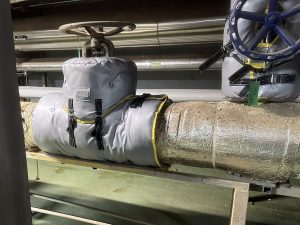
Large air voids, open ends, and poorly fitting covers may reduce the initial purchase price, but they promote internal convection, fuel a chimney effect, accelerate closure failure, and shorten overall service life. Properly engineered blanket insulation systems featuring a tight fit, insulated end caps, and minimized air movement are built to maximize thermal performance, preserve closure integrity, and deliver the lowest lifetime cost.
Because in industrial insulation, thickness matters, but fit matters just as much.

Precision-fit blanket insulation is particularly important for complex equipment such as economizers. Learn more in our related article: Why It Makes Sense to Insulate Economizers – and Why Removable Blanket Insulation Is Often the Best Solution.
If we can assist you, please contact us or request a free TAS Energy Audit today.

“Quality, Sustainability, Energy Efficiency”







tonS of CO2 Emissions
reduced