Delivering a Complex Steam Turbine Insulation Project Within a Critical Shutdown Window
Steam turbine insulation projects are among the most demanding applications in industrial insulation. High operating temperatures, complex equipment geometry, restricted access, multiple contractors working simultaneously, and tight shutdown schedules leave little room for error.
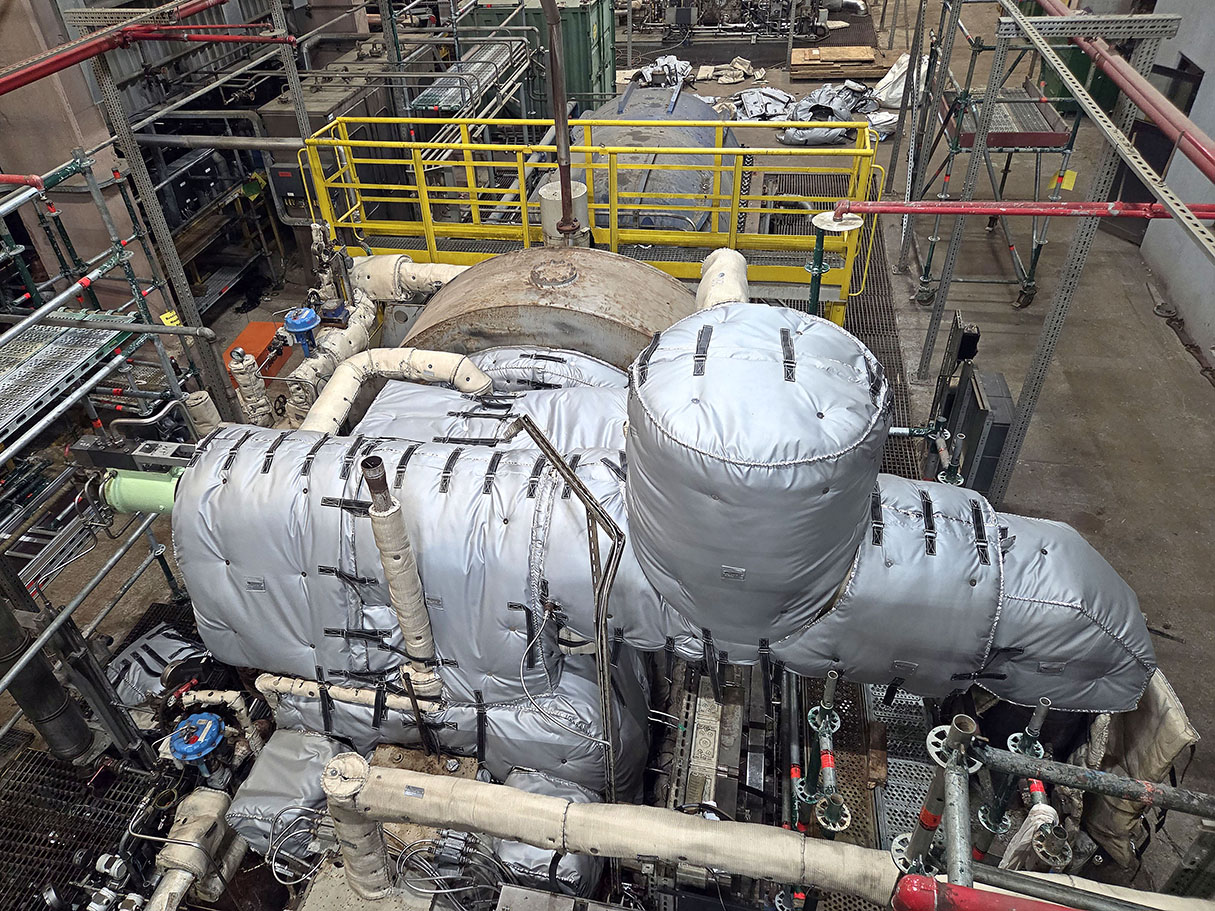
TAS Blanket Insulation recently completed a turnkey insulation project involving two major steam turbines—one Alstom unit and one Siemens unit—along with their associated steam piping, valves, flanges, and fittings. The project comprised 314 individually engineered removable-reusable insulation blankets, all custom designed, manufactured, and installed to meet the customer's strict shutdown schedule. From the completion of site measurements to finished manufacturing, the entire engineering and production process took just two weeks.
Despite the differences in manufacturer geometries, the complexity of the equipment, and the challenging site conditions, every blanket fitted precisely during installation, allowing the project to be completed successfully before turbine commissioning.
Equipment:
Scope & Insulation System:
Materials:
Services Provided:
Engineering & Manufacturing Turnaround:
Steam turbines operate with high-temperature, high-pressure steam. Depending on operating conditions, external surface temperatures can exceed 500°C, creating a significant burn hazard for personnel and continuously radiating valuable energy into the surrounding environment.
A properly engineered steam turbine insulation system provides several critical benefits:
Unlike conventional pipework, both Alstom and Siemens turbines feature highly irregular geometries with numerous inspection covers, bolted casings, auxiliary piping, and support structures. Because these components require regular maintenance, custom removable insulation blankets are the preferred solution over conventional rigid insulation.
This project required complete thermal coverage across two distinct turbine geometries while maintaining future maintenance access. The insulation system incorporated two layers with a combined thickness of 100 mm, providing high thermal performance while remaining manageable for site crews.
The project presented several technical challenges:
Before the new insulation system could be measured and engineered, the old, deteriorated insulation had to be stripped. It was in very poor condition—damaged, compressed, and completely degraded after years of service, which significantly reduced both thermal performance and mechanical integrity.
Removing this deteriorated material required approximately two to three days before accurate measurements could even begin. Its condition reinforced a vital engineering lesson: durability matters. Because steam turbine insulation blankets are repeatedly removed and reinstalled during major overhauls, they must possess exceptional mechanical strength to prevent tearing or losing their shape over time.
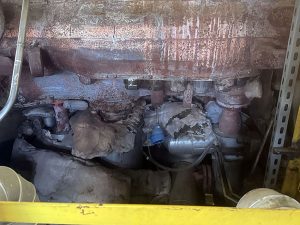
The project became even more demanding because measurements had to be carried out while the turbine overhaul was already underway. As our team prepared the equipment for measurement, the turbine repair contractor had already begun dismantling the units.
With several contractors requiring access to the equipment at different stages, constant coordination between plant maintenance, turbine specialists, and the TAS project team was essential to ensure measurements were completed without delaying the mechanical overhaul.
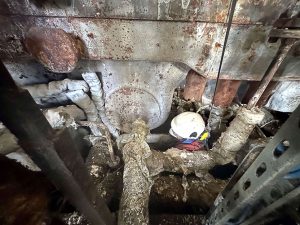
Once the turbines and surrounding equipment were fully accessible, detailed measurements were carried out across turbine casings, steam piping, valves, flanges, branch connections, and complex transition areas. Based on these data points, every one of the 314 insulation blankets was individually engineered using CAD to match the specific profiles of the Alstom and Siemens machinery.
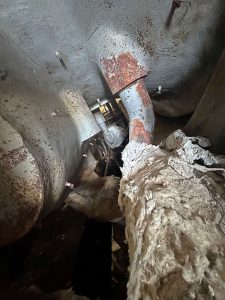
[Site Measurement] ➔ [CAD Engineering & Segmentation] ➔ [Precision Manufacturing] ➔ [Sequential Installation]
The insulation system was strategically divided into logical blanket sections so that individual areas could be removed during future maintenance without unnecessarily disturbing the surrounding insulation.
Blanket size and weight limitations were carefully considered. Large insulation sections can become unwieldy and unsafe to handle, increasing installation times and the risk of damage. Each blanket was designed to achieve the optimum balance between thermal performance, mechanical strength, and practical handling, allowing maintenance personnel to safely manage individual sections without specialized lifting equipment.
The insulation system was manufactured using high-temperature silica insulation materials, specifically selected for the demanding operating temperatures encountered in steam turbine applications. To maximize long-term durability, every blanket incorporated a reinforced stainless steel construction.
This reinforcement helps the blankets:
Following the site measurements, the TAS project management, design, and production teams worked around the clock to execute CAD engineering, blanket segmentation, material cutting, sewing, stainless steel reinforcement, and strict quality control within the two-week window. With 314 unique blankets, accurate identification and clear labeling were essential for an organized deployment.
Installation proved to be one of the most challenging phases of the project. The space beneath the turbines was extremely restricted, leaving very limited room for installers to position the blankets and secure the fastening systems.
The two-layer, 100 mm insulation system added further complexity; each inner-layer blanket had to be securely positioned before the corresponding outer-layer section could be aligned around the turbine casings and fittings. Because the turbines were scheduled for immediate commissioning, there was zero opportunity for field modifications after startup.
To mitigate this risk completely, TAS deployed a fully equipped mobile manufacturing station on-site via our service van. This allowed our team to handle immediate, precision adjustments on-site if required, guaranteeing the tight startup deadline would be met regardless of unforeseen site challenges.
The Result: Thanks to this rigorous preparation, the entire system integrated flawlessly. All 314 custom removable insulation blankets were installed successfully within the restricted window, confirming the absolute accuracy of the initial site measurements, CAD engineering, and proactive project planning.
A removable insulation blanket must do much more than simply fit around equipment. For complex machinery like Alstom and Siemens steam turbines, precise engineering significantly reduces plant downtime over the insulation system's lifetime. Precise segmentation, clear identification, and manageable blanket sizes allow maintenance teams to isolate and remove only the sections required for servicing, getting the equipment back online quickly.
The Upgraded System Delivers:
Successful steam turbine insulation requires far more than manufacturing high-quality materials; it demands experienced project management that integrates smoothly with active mechanical overhauls where every hour counts.
A successful steam turbine insulation project requires specialized engineering that can handle complex casing geometries, intense thermal demands, and aggressive shutdown schedules.
Whether you operate Alstom, Siemens, or other major OEM steam turbines, TAS Blanket Insulation provides complete turnkey removable insulation solutions—from initial teardown and precision CAD design to custom manufacturing and fast on-site installation.
Don't let insulation delays impact your commissioning timeline. Contact TAS Blanket Insulation today to discuss your upcoming turbine overhaul and ensure your next shutdown stays on schedule.
Learn more about how removable and reusable insulation can improve safety and efficiency across your steam system.
Learn more about how precision-engineered blanket insulation improves thermal performance and maintenance efficiency for complex industrial equipment in our related technical articles.
If we can assist you, please contact us or request a free TAS Energy Audit today.
“Quality, Sustainability, Energy Efficiency”




tonS of CO2 Emissions
reduced